Operationalizing AI Governance: Balancing Innovation, Risk, and Accountability in AI Systems
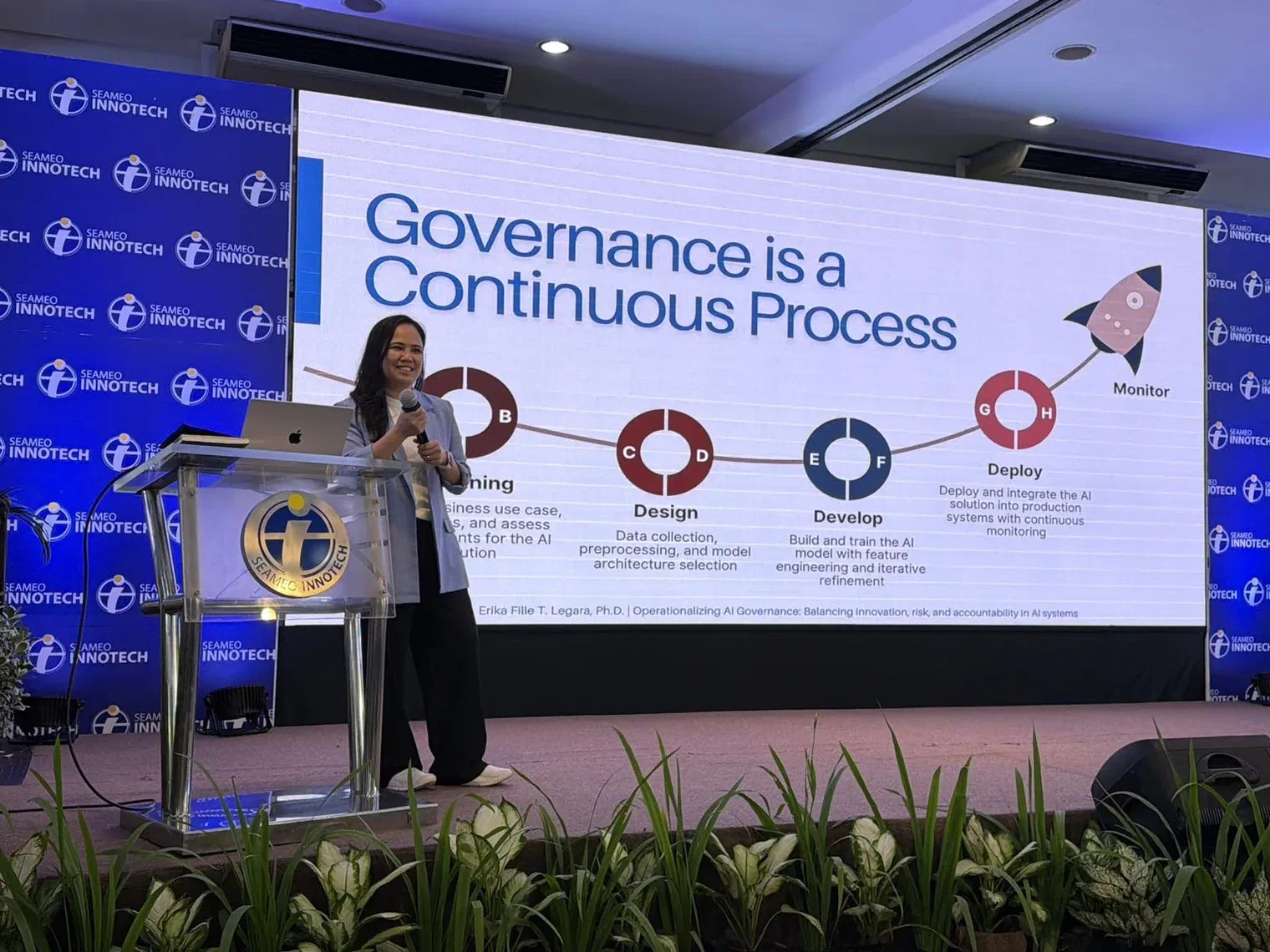
A full-day, case-based session on governing AI systems across their lifecycle, for TESDA technical staff and systems developers and members of SEAMEO INNOTECH’s AI Committee.
On 28 October 2026 I led a full-day session on operationalizing AI governance at SEAMEO INNOTECH in Quezon City. It was part of a learning program that the Education Center for AI Research (ECAIR) of the Department of Education runs for the Technical Education and Skills Development Authority (TESDA). More than 50 people attended, mostly TESDA technical staff and systems developers, along with members of INNOTECH’s AI Committee.
The program pairs training with development. ECAIR’s AI scientists and engineers work alongside TESDA’s teams as they build their own AI systems, so TESDA can run and maintain those systems after the program ends. The governance track runs over several days, and I share it with Paula Martinez, ECAIR’s AI governance lead.
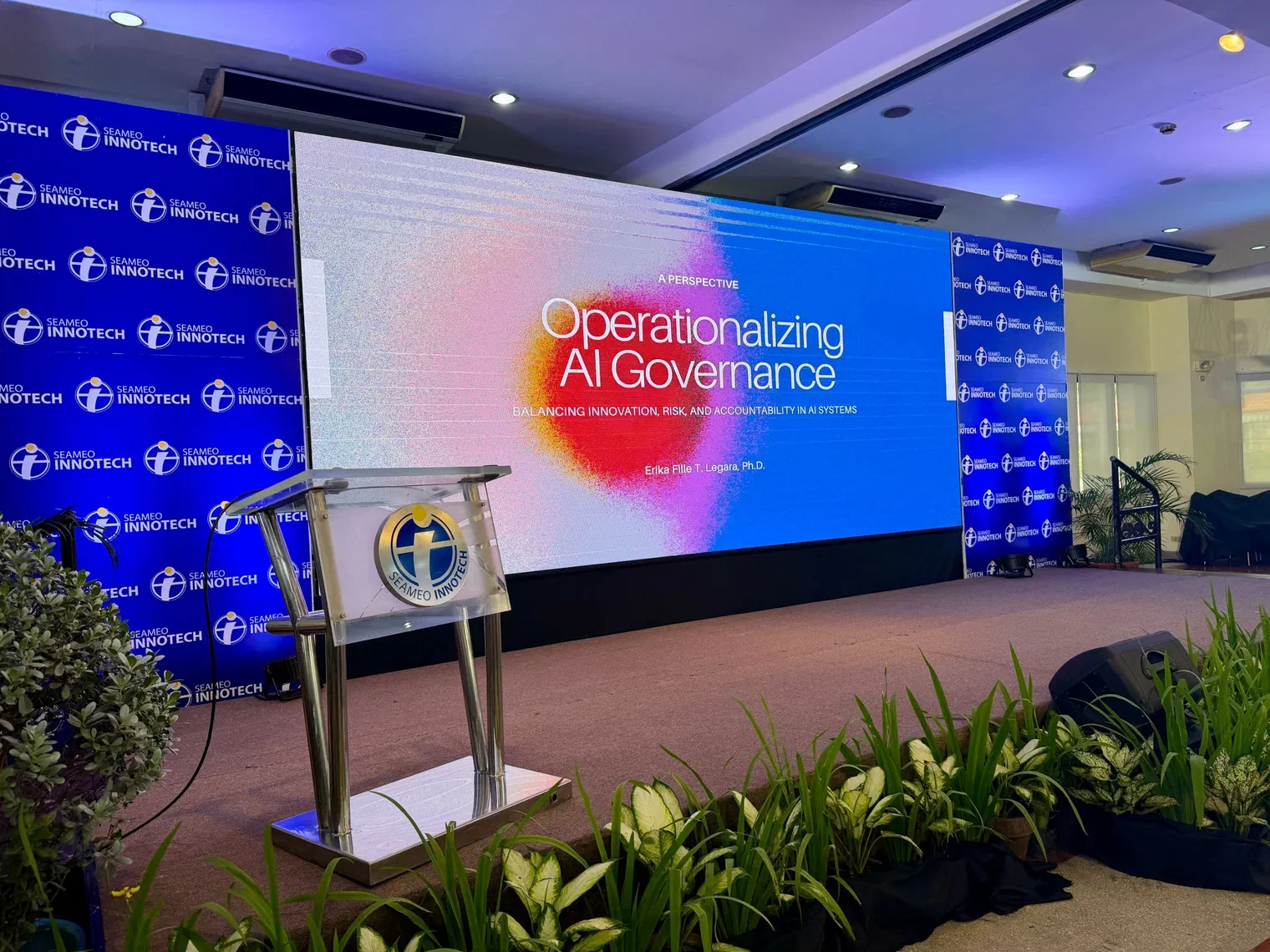
The session covered two lifecycles that run at the same time. The first is the deployment lifecycle, from defining what an AI system is for to monitoring it once it is live. Inside it is the build cycle: data, model choices and testing. Both call for governance decisions at every stage.
We worked through five fictional cases set on real platforms, including systems ECAIR has already built and systems ECAIR and TESDA are building together. Two questions drew the most debate. The first was how much accuracy to give up for fairness when the two pull apart. The second was whether to build on data collected without explicit consent when the deadline is tight and the benefit is clear. Both came down to who decides, who acts, and which one person is accountable if it goes wrong.
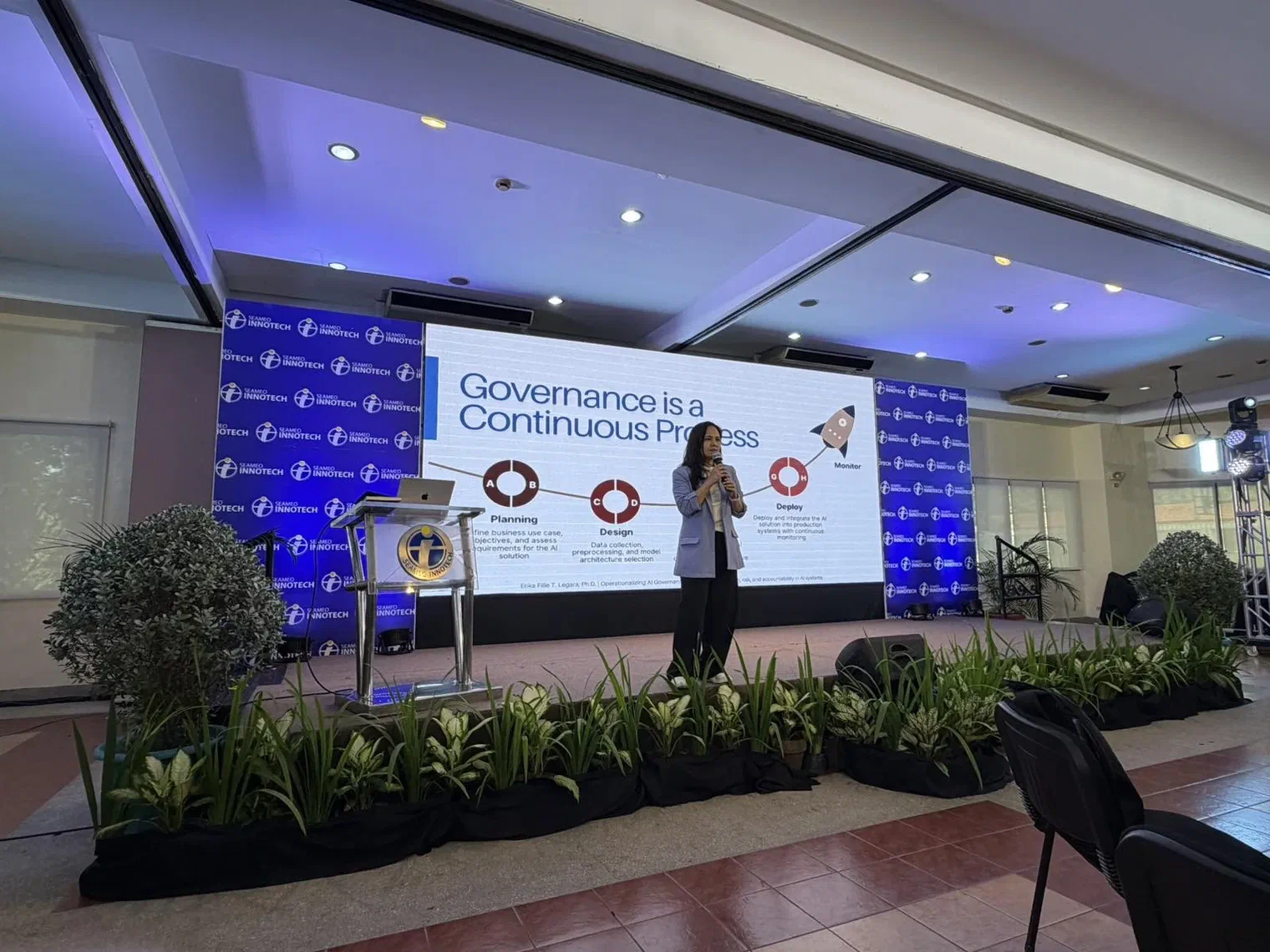
My thanks to DepEd, TESDA and SEAMEO INNOTECH for the partnership, to Sebastian Felipe Bundoc for moderating the day, and to the ECAIR team behind the program.